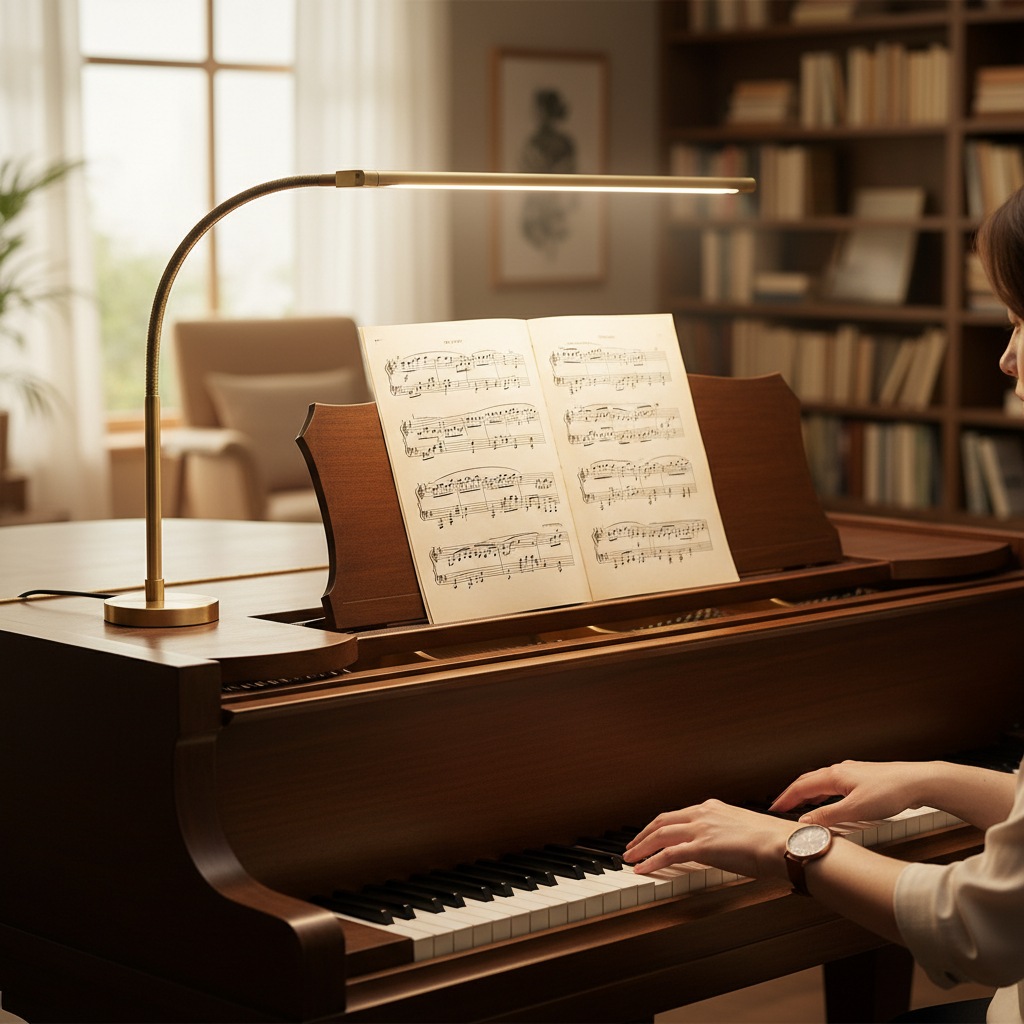
For every pianist, the silent struggle with inadequate lighting is a familiar one. Whether you’re deciphering complex classical scores, learning new contemporary pieces, or simply enjoying a casual practice session, poor illumination can quickly turn your passion into a frustrating chore. Squinting at dimly lit sheet music not only hinders your ability to read notes accurately but also strains your eyes, leading to fatigue and potentially long-term vision issues. Finding the perfect lighting solution for your piano is not just a luxury; it’s an essential investment in your musical journey and eye health. This comprehensive guide will illuminate the path to selecting the best lamp for piano players and sheet music, ensuring every note is crystal clear and every practice session is a joy.
Why Dedicated Piano Lighting Matters
Many aspiring pianists make the mistake of relying on standard room lighting or an everyday desk lamp, only to find themselves grappling with shadows, uneven light distribution, and harsh glare. These common lighting setups are simply not designed to meet the unique demands of a piano environment. Dedicated piano lamps, however, are engineered to provide optimal illumination across the entire music stand and piano keys, minimizing eye strain and maximizing clarity.
Using a generic lamp often results in “hot spots” – areas of intense brightness – alongside shadowed regions, making it difficult to maintain focus on the sheet music or observe your hand positioning on the keys. This unevenness forces your eyes to constantly adapt, accelerating fatigue. A quality piano lamp distributes light uniformly, ensuring consistent brightness from edge to edge of your sheet music, allowing for uninterrupted concentration and more comfortable practice sessions.
Types of Piano Lamps
The world of piano lamps offers a variety of styles, each suited to different piano types, spaces, and aesthetic preferences. Understanding these options is the first step toward finding your ideal lighting companion.
Clip-On Piano Lamps
Clip-on lamps are perhaps the most versatile and popular choice, especially for grand pianos and dedicated music stands. They are designed to attach directly to the music desk, providing focused light precisely where you need it.
- Advantages:
- Portability: Easy to move between instruments or take to performances.
- Space-Saving: Doesn’t require additional table or floor space.
- Direct Illumination: Positions light directly over the sheet music, minimizing shadows.
- Ideal for Grand Pianos: Many models are specifically designed to clip onto grand piano music stands without obstructing the piano’s elegance.
- Disadvantages:
- Limited Coverage: Smaller models might not cover extremely wide sheet music setups evenly.
- Battery Dependency: Cordless models require regular charging or battery replacement, though many come with rechargeable options.
- Key Considerations: Look for models with felt-lined clamps to protect your piano’s finish, a flexible gooseneck for precise positioning, and a wide light bar to ensure broad, even coverage.
|
Our Picks for the Best Desk lamp in 2026
As an Amazon Associate I earn from qualifying purchases.
|
||
| Num | Product | Action |
|---|---|---|
| 1 | CHARYJOD LED Desk Lamp for Office Home, Height Adjustable Architect Desk Light with USB Adapter, Stepless Dimming Desk Lamp Light for Reading, Study, Workbench |

|
| 2 | Voncerus LED Desk Lamp with Clamp, Eye-Caring Clip on Lights for Home Office, 3 Modes 10 Brightness, Long Flexible Goose-Neck, Metal, Swing Arm Architect Task Table Lamps with USB Adapter, Black |
|
| 3 | LED Desk Lamp with USB Ports,Touch Desk Lamps for Home Office with 5 Color Modes,3 Brightness Desk Light with Small Night Light,Reading Lamp Table Lamp for Bedroom Bedside Study Black (with adapter) |
|
| 4 | Motumen Led Desk Lamp for Home Office, Eye-Care Architect Light with Clamp, Smart Double Head Computer Monitor Table Clip Lamp, Adjustable Flexible Goose-Neck, 25 Lighting Models, Task Lamp, Black |
|
| 5 | Airlonv LED Desk Lamp for Office Home, Eye-Caring Desk Light with Stepless Dimming Adjustable Flexible Gooseneck, 10W USB Adapter Desk Lamp with Clamp for Reading, Study, Workbench (Black) |
|
| 6 | BOHON LED Desk Lamp with USB Charging Port 3 Color Modes Dimmable Reading Light Intelligent Induction Auto Dimming Task Lamp Neck Flexible Table Lamp for Bedside Office, AC Adapter Include |
|
| 7 | 15W LED Desk Lamp with USB Charging Ports – Dimmable Table Lamp with 3 Color Temps, 5 Brightness, 4 Timers, Flexible Gooseneck Light with Base, Eye-Caring Reading Light for Home Office, Bedroom, Study |
|
| 8 | Micomlan Led Desk Lamp with Clamp, Architect Desk Lamp for Home Office with Atmosphere Lighting, 24W Ultra Bright Auto Dimming Computer Light Stepless Dimming and Tempering LED Table Light |
|
| 9 | Fenmzee Bedside Table Lamp for Bedroom - 3 Way Dimmable Touch Lamp USB C Charging Ports and AC Outlet, Small Lamp Wood Base Round Flaxen Fabric Shade for Living Room, Desk, LED Bulb Included |
|
| 10 | Sailstar Desk Lamp, LED Desk Lamps for Home Office, Wireless Charger Small Desk Lamp with Pen Holder, 3 Color Modes, Dimmable, CRI 85, 800LM, Study Lamps for College Dorm Room, Adapter Included, Black |
|
Desktop/Upright Piano Lamps
Desktop piano lamps are a classic choice, often preferred for upright and digital pianos where they can sit comfortably on the top or a nearby surface. These lamps typically feature a sturdy base and an adjustable arm.
- Advantages:
- Stability: A weighted base ensures the lamp remains firmly in place.
- Robust Design: Often feature a more substantial and traditional aesthetic.
- Versatile Placement: Can illuminate both the sheet music and the piano keys effectively.
- Disadvantages:
- Surface Space: Requires available space on top of the piano or an adjacent surface.
- Less Portable: Generally heavier and less convenient to move than clip-on models.
- Key Considerations: Opt for lamps with adjustable height and arm articulation to direct light precisely. A wide, rotatable shade is crucial for distributing light across the entire music stand and keys without glare.
Floor Piano Lamps
Floor lamps designed for pianos offer the greatest flexibility in placement and can be an excellent choice for both grand and upright pianos, particularly when space on the piano itself is limited.
- Advantages:
- Versatile Positioning: Can be placed to the side or behind the piano, providing expansive lighting.
- Wide Lighting Area: Often illuminates not just the sheet music and keys but also the surrounding musical space.
- Aesthetic Integration: Many designs blend seamlessly with home decor, adding a touch of elegance.
- Disadvantages:
- Floor Space: Requires dedicated floor space next to the piano.
- Higher Cost: Often come with a higher price point due to their larger size and more complex design.
- Key Considerations: Seek models with a heavy, stable base, an adjustable arm and head, and sufficient height to clear the piano’s music stand and illuminate broadly.
Key Features to Look for in a Piano Lamp
Choosing the right piano lamp goes beyond just its type. Several critical features contribute to optimal performance, eye comfort, and overall satisfaction.
LED Technology
Modern piano lamps predominantly utilize LED (Light Emitting Diode) technology for numerous compelling reasons:
- Energy Efficiency: LEDs consume significantly less power than traditional incandescent or fluorescent bulbs, saving on electricity bills.
- Longevity: LED bulbs boast an incredibly long lifespan, often lasting 50,000 hours or more, meaning you’ll rarely, if ever, need to replace them.
- Low Heat Emission: LEDs produce very little heat, which is vital for protecting delicate piano finishes and ensuring a comfortable playing environment.
- Flicker-Free Light: High-quality LEDs deliver consistent, flicker-free illumination, which is crucial for reducing eye strain and preventing headaches during long practice sessions.
Adjustable Brightness (Dimming)
The ability to adjust the lamp’s brightness is paramount. Your lighting needs will vary depending on the ambient light in the room, the specific task (e.g., intensive practice versus casual playing), and your personal preference. A dimmable piano lamp, ideally with multiple levels or stepless dimming, allows you to customize the intensity of light, ensuring comfort and clarity in any situation.
Customizable Color Temperature (CCT)
Color temperature, measured in Kelvins (K), significantly impacts your mood and visual acuity. Modern LED piano lamps often offer adjustable color temperature settings, providing immense flexibility:
- Warm Light (2700K-3000K): Emits a soft, yellowish glow, ideal for creating a relaxing atmosphere, casual playing, or unwinding in the evening.
- Neutral/Cool White Light (4000K-6500K): Produces a brighter, whiter, or even slightly bluish light that enhances focus and provides excellent contrast for reading black notes on white sheet music. Many experts recommend a range of 5000K-6500K for optimal contrast during focused practice.
The best lamps will allow you to switch between these temperatures, adapting to your activity and time of day.
Wide and Even Light Coverage
One of the most crucial aspects of a good piano lamp is its ability to cast light widely and evenly. A narrow beam will create shadows and uneven illumination, while a broad light bar ensures that two or even three pages of sheet music are lit uniformly. Look for lamps with shades that span at least 19 to 22 inches to effectively cover a standard music stand and provide sufficient spill onto the piano keys. This wide, consistent spread eliminates glare and dark spots, making it easier to read and play.
Glare Reduction
Glossy sheet music or reflective piano surfaces can create distracting glare under improper lighting. High-quality piano lamps incorporate features like optical lenses or anti-glare diffusers to minimize reflections and ensure a comfortable visual experience. A lamp that directs light primarily onto the music, rather than into your eyes or reflecting off the keys, is essential for long-term eye comfort.
Flexibility and Adjustability
Beyond adjustable brightness and color temperature, mechanical flexibility is key. Goosenecks, swivel heads, and adjustable-height arms allow you to precisely position the light beam, tailoring it to your posture, the angle of your music stand, and the specific area you need to illuminate. This fine-tuning capability ensures that light is always where you need it, and never where you don’t.
Power Source
Piano lamps come in both wired (AC adapter) and battery-operated (cordless) versions. Cordless options offer maximum flexibility in placement and a clean, cable-free aesthetic, making them great for performance settings or grand pianos where wires might detract from the look. If choosing a battery-operated lamp, look for models with long battery life and convenient rechargeable options. Wired lamps offer continuous power without the need for recharging.
Build Quality and Aesthetics
While functionality is paramount, the lamp’s construction and design also matter. Durable materials like solid brass, steel, or high-quality aluminum ensure longevity. The lamp’s finish and style should complement your piano and the surrounding decor, adding to the instrument’s beauty rather than detracting from it.
Comparing Popular Piano Lamp Options
While individual preferences vary, several brands consistently receive high praise for their piano lighting solutions. Here’s a brief overview of some leading options:
| Feature/Brand | Cocoweb | BenQ Piano Light (e.g., e-Reading Lamp) | Lumiens L9 / Mighty Bright | House of Troy | Serious Readers (Alex Varifocus, HD) |
|---|---|---|---|---|---|
| Primary Type | Clip-on, Desktop, Floor | Desktop (often for uprights/digitals) | Clip-on (portable) | Desktop, Floor, Clip-on (traditional) | Floor (specialized task light) |
| Light Source | LED | LED | LED | LED (some traditional may use other) | LED |
| Brightness | Dimmable, often remote-controlled | Auto-dimming, multiple levels | 2-3 brightness levels | Dimmable on many models | High performance, adjustable focus |
| Color Temp | Often fixed or 2-3 settings | Adjustable CCT (multiple settings) | Often fixed, cool white | Fixed | Fixed or choice of CCT |
| Coverage | Very wide (19-22″ shades available) | Ultra-wide illumination, even spread | Sufficient for 1-2 pages | Wide, often traditional shade design | Excellent, adjustable light spread |
| Adjustability | Gooseneck, swivel shades | Flexible arm & head, height adjustment | Gooseneck | Flexible arm, swivel shades | Flexible arm, focus adjustment |
| Special Features | Felt-lined clamps, long life, often battery option | Auto-dimming, presence detection, memory | Portable, rechargeable battery | Classic designs, high-end finishes | Glare-free, high contrast, optimal vision |
| Typical Price | Mid-to-High | Mid-to-High | Low-to-Mid | High-End | High-End |
This table provides a general overview and specific features can vary widely by model within each brand.
How to Choose the Right Piano Lamp for You
With a wealth of options available, making the final decision can feel overwhelming. Here’s a step-by-step guide to help you find the perfect piano lamp:
1. Consider Your Piano Type
- Grand Piano: Clip-on lamps are often ideal as they attach directly to the music stand without cluttering the piano’s top. Floor lamps can also work beautifully for wider illumination.
- Upright or Digital Piano: Desktop lamps are a popular choice, sitting directly on the piano or a nearby shelf. Clip-on lamps can also be effective if you prefer to keep the top clear.
- Portable Keyboard/Music Stand: Lightweight clip-on lamps are best for portability and direct illumination.
2. Identify Your Primary Use
- Serious Practice/Study: Prioritize lamps with adjustable brightness, customizable cool/neutral color temperatures (4000K-6500K), and wide, even, glare-free coverage for optimal focus and eye comfort.
- Performance: Cordless clip-on lamps offer freedom of movement and a clean stage presence.
- Casual Playing/Ambiance: Adjustable brightness and the option for warmer color temperatures (2700K-3000K) can enhance the mood.
- Decorative: While still needing to be functional, aesthetics and finish will play a larger role in your decision.
3. Assess Your Space
- Ambient Lighting: If your room is generally well-lit, you might need less intense brightness from your piano lamp. If your space is dim, a powerful, highly adjustable lamp is crucial.
- Available Space: Do you have space on your piano for a desktop lamp, or would a clip-on or floor lamp be more suitable? Consider cable management if choosing a wired option.
4. Determine Your Budget
Piano lamps range significantly in price, from affordable clip-on models to premium, feature-rich floor lamps. While inexpensive options can be appealing, remember that a high-quality lamp is a long-term investment in your eye health and playing enjoyment. Balance your budget with the essential features you need.
5. Personal Preferences
Consider the lamp’s finish (e.g., black, brass, nickel) to match your piano and decor. Think about additional features like remote controls, memory functions for settings, or USB charging ports if those are important to you.
Conclusion
The pursuit of musical excellence and joyful practice hinges significantly on the quality of your environment, with lighting playing a pivotal role. Investing in a dedicated piano lamp designed to evenly illuminate your sheet music and keys, reduce glare, and offer customizable brightness and color temperature will transform your playing experience. By considering the various types of lamps, their essential features, and how they align with your specific needs and piano type, you can make an informed choice that supports your vision and enhances every moment you spend at the keyboard. Don’t let poor lighting diminish your passion; choose the right piano lamp and let your music shine.
What difference could the perfect light make to your next performance?
Frequently Asked Questions
What is the ideal color temperature for reading sheet music?
For optimal contrast and reduced eye strain when reading sheet music, a neutral to cool white light is generally recommended, ranging from 5000K to 6500K. This daylight-like spectrum helps black notes stand out clearly against white paper. However, lamps with adjustable color temperature allow you to switch to warmer tones (around 2700K-3000K) for a more relaxed ambiance during casual playing.
Are LED piano lamps worth the investment?
Absolutely. LED piano lamps offer significant advantages over traditional lighting, including exceptional energy efficiency, an incredibly long lifespan (often tens of thousands of hours), and low heat emission, which protects your piano. Their ability to provide flicker-free, customizable brightness and color temperature settings makes them superior for eye comfort and focus, making them a highly worthwhile investment for any pianist.
Can I use a regular desk lamp for my piano?
While a regular desk lamp might provide some light, it is generally not recommended for piano players. Standard desk lamps often produce uneven illumination, creating hot spots and shadows that can make reading sheet music difficult and cause eye strain. They also typically lack the wide light spread and anti-glare features specifically designed for piano environments, potentially leading to discomfort and hindering your practice.
How wide should a piano lamp be?
For effective and even illumination across a standard music stand, a piano lamp should ideally have a shade or light bar that is at least 19 to 22 inches wide. This width ensures that multiple pages of sheet music are lit uniformly from edge to edge, reducing the need to constantly reposition the lamp or your music.
Do piano lamps damage the piano finish?
High-quality piano lamps, especially clip-on models, are designed with your piano’s protection in mind. Many feature felt-lined clamps or bases to prevent scratches or damage to delicate finishes. Additionally, LED lamps produce very little heat, eliminating the risk of heat damage. Always ensure any lamp you choose has protective features and is used according to the manufacturer’s instructions.