In today’s digital landscape, where screen time dominates our professional and personal lives, the right lighting is not just a luxury—it’s a necessity for productivity and eye health. As you navigate the options for illuminating your workspace, two prominent contenders often emerge: the sleek, innovative monitor light bar (often called a ScreenBar) and the familiar, versatile traditional desk lamp. Each offers distinct advantages and caters to different needs, making the decision more nuanced than it might first appear. This article will meticulously compare these lighting solutions to help you determine the perfect fit for your setup.
Understanding the Essentials: What Are They?
ScreenBar (Monitor Light Bar)
|
Our Picks for the Best Desk lamp in 2026
As an Amazon Associate I earn from qualifying purchases.
|
||
| Num | Product | Action |
|---|---|---|
| 1 | CHARYJOD LED Desk Lamp for Office Home, Height Adjustable Architect Desk Light with USB Adapter, Stepless Dimming Desk Lamp Light for Reading, Study, Workbench |

|
| 2 | Motumen Led Desk Lamp for Home Office, Eye-Care Architect Light with Clamp, Smart Double Head Computer Monitor Table Clip Lamp, Adjustable Flexible Goose-Neck, 25 Lighting Models, Task Lamp, Black |
|
| 3 | Sailstar Desk Lamp, LED Desk Lamps for Home Office, Wireless Charger Small Desk Lamp with Pen Holder, 3 Color Modes, Dimmable, CRI 85, 800LM, Study Lamps for College Dorm Room, Adapter Included, Black |
|
| 4 | Fenmzee Bedside Table Lamp for Bedroom - 3 Way Dimmable Touch Lamp USB C Charging Ports and AC Outlet, Small Lamp Wood Base Round Flaxen Fabric Shade for Living Room, Desk, LED Bulb Included |
|
| 5 | Airlonv LED Desk Lamp for Office Home, Eye-Caring Desk Light with Stepless Dimming Adjustable Flexible Gooseneck, 10W USB Adapter Desk Lamp with Clamp for Reading, Study, Workbench (Black) |
|
| 6 | Micomlan Led Desk Lamp with Clamp, Architect Desk Lamp for Home Office with Atmosphere Lighting, 24W Ultra Bright Auto Dimming Computer Light Stepless Dimming and Tempering LED Table Light |
|
| 7 | 15W LED Desk Lamp with USB Charging Ports – Dimmable Table Lamp with 3 Color Temps, 5 Brightness, 4 Timers, Flexible Gooseneck Light with Base, Eye-Caring Reading Light for Home Office, Bedroom, Study |
|
| 8 | Voncerus LED Desk Lamp with Clamp, Eye-Caring Clip on Lights for Home Office, 3 Modes 10 Brightness, Long Flexible Goose-Neck, Metal, Swing Arm Architect Task Table Lamps with USB Adapter, Black |
|
| 9 | BOHON LED Desk Lamp with USB Charging Port 3 Color Modes Dimmable Reading Light Intelligent Induction Auto Dimming Task Lamp Neck Flexible Table Lamp for Bedside Office, AC Adapter Include |
|
| 10 | LED Desk Lamp with USB Ports,Touch Desk Lamps for Home Office with 5 Color Modes,3 Brightness Desk Light with Small Night Light,Reading Lamp Table Lamp for Bedroom Bedside Study Black (with adapter) |
|
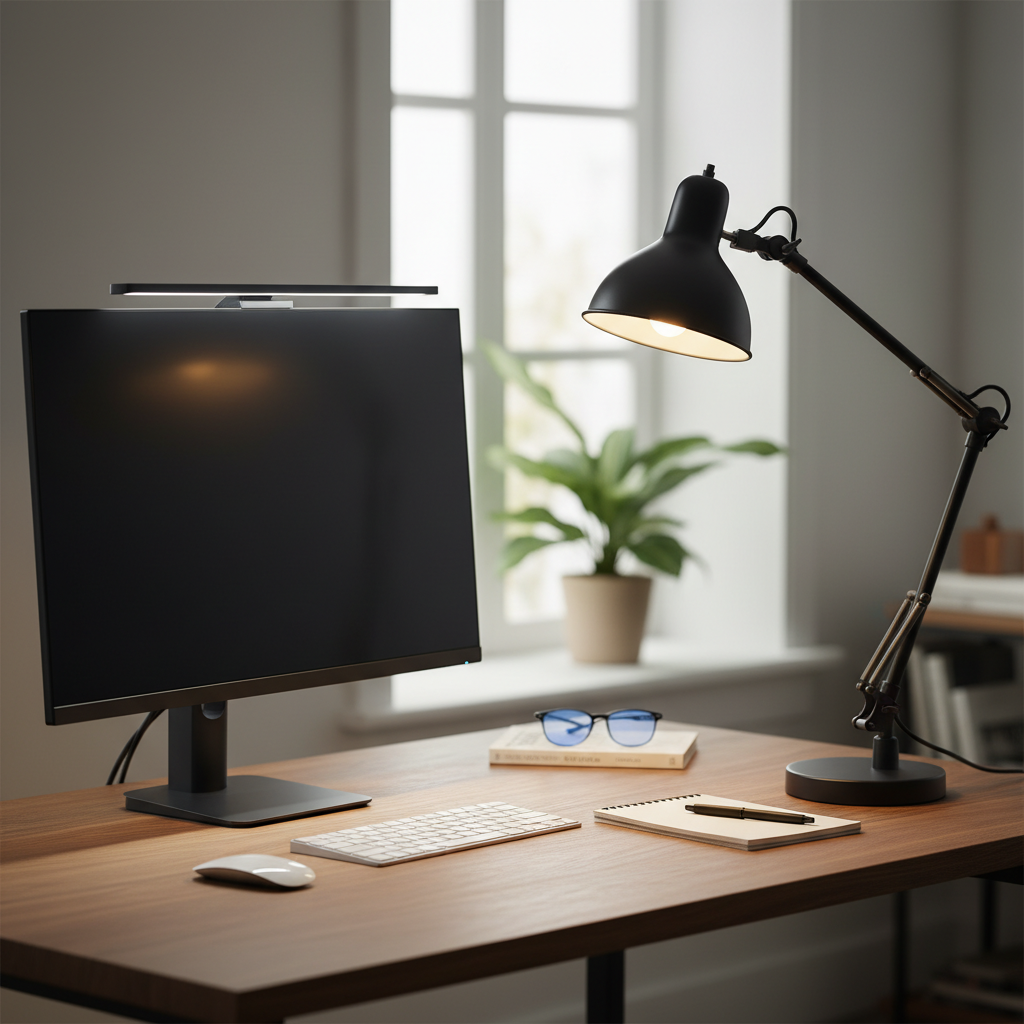
A ScreenBar is a modern lighting device specifically designed to clip onto the top edge of your computer monitor. Its primary innovation lies in its asymmetrical optical design, which casts light downwards and forwards onto your desk without shining onto the screen itself. This design ensures that your workspace is well-lit, while crucially eliminating glare and reflections that can cause eye strain. Monitor light bars are typically slim, minimalist fixtures that seamlessly integrate with your existing setup, saving valuable desk space. They often feature advanced controls for brightness and color temperature, adapting to various tasks and ambient light conditions.
Traditional Desk Lamp
A traditional desk lamp is a standalone lighting fixture that typically sits on your desk or clamps to its edge. These lamps come in a vast array of designs, from classic incandescent models to modern LED versions with adjustable arms and heads. Their primary function is to provide direct illumination to a specific area of your desk, making them versatile for tasks ranging from reading physical documents to writing and crafting. While many contemporary desk lamps now incorporate energy-efficient LED technology and some adjustability, their fundamental design often means a more significant footprint on your workspace.
Key Differences and Comparison
The choice between a ScreenBar and a traditional desk lamp hinges on several critical factors, including design, light distribution, impact on eye health, and versatility.
Design and Space Efficiency
One of the most immediate distinctions is how these lights integrate with your workspace.
- ScreenBar: These devices are champions of minimalism. By mounting directly onto your monitor, they occupy no physical space on your desk surface. This is a significant advantage for users with compact desks or those who prefer a clean, uncluttered aesthetic. The sleek profile of a ScreenBar contributes to a modern, organized workspace.
- Traditional Desk Lamp: A traditional lamp, by its very nature, requires a base on your desk or a clamping mechanism on the side. This consumes valuable surface area, which can be a drawback for smaller workstations. While some lamps offer flexible arms to extend over your workspace, the base remains a permanent fixture. However, the variety in design means a traditional lamp can also serve as a decorative element, complementing your room’s decor.
Light Distribution and Glare Prevention
How light is cast onto your workspace and monitor is a critical differentiator affecting comfort and productivity.
- ScreenBar: The asymmetrical optical design of a ScreenBar is its defining feature. It precisely directs light onto your desk, illuminating your keyboard, mouse, and documents, while actively preventing any light from reflecting off your screen. This eliminates screen glare, a common irritant that can obscure content and strain your eyes. The result is uniform, shadow-free illumination across your primary work area, enhancing contrast and visibility.
- Traditional Desk Lamp: Most traditional desk lamps, especially those with symmetrical light beams, tend to spread light in all directions. While this can provide good ambient light, it often leads to unwanted reflections on your monitor. This glare can make it harder to see details on your screen, forcing your eyes to work harder and leading to fatigue. Achieving glare-free illumination with a traditional lamp often requires careful positioning, which may not always be feasible or effective.
Eye Comfort and Health
The long-term impact on your vision and overall well-being should be a top consideration.
- ScreenBar: Designed with eye health in mind, ScreenBars typically feature flicker-free LED technology and often incorporate low blue light filters, conforming to international eye safety standards. The ability to fine-tune both brightness and color temperature allows you to create optimal lighting conditions that reduce eye strain, combat fatigue, and prevent headaches, especially during extended hours of screen time. This customized and glare-free illumination supports better visual comfort.
- Traditional Desk Lamp: The eye comfort offered by traditional desk lamps can vary significantly. Older incandescent or halogen lamps often produce harsh, static light with invisible flicker, which can contribute to eye strain and fatigue over time. Modern LED desk lamps have largely addressed these issues, offering flicker-free light and often featuring adjustable brightness and color temperature. However, even with LED technology, without an asymmetrical design, traditional lamps still pose a higher risk of screen glare, which is a major contributor to eye discomfort.
Adjustability and Control
The level of control you have over your lighting significantly impacts its utility.
- ScreenBar: Monitor light bars excel in adjustability. Premium models often provide a wide range of brightness levels (e.g., 14-15 settings) and multiple color temperature options (e.g., 8 settings, from warm 2700K to cool 6500K). Many also include intelligent features like built-in ambient light sensors for automatic brightness adjustment, ensuring consistent illumination throughout the day without manual intervention. Some even remember your preferred settings after powering off.
- Traditional Desk Lamp: The adjustability of traditional desk lamps varies widely. Basic models may only offer on/off functionality. More advanced modern LED desk lamps provide dimming capabilities and sometimes adjustable color temperatures. However, the extent of fine-tuned control and advanced features like automatic adjustment found in many ScreenBars is less common in traditional lamps.
Versatility and Use Cases
Consider your daily tasks beyond just screen time.
- ScreenBar: A monitor light bar is exceptionally efficient for screen-focused work. It is ideal for tasks such as coding, writing, graphic design, gaming, or any activity that primarily involves looking at your computer screen and physical items directly beneath it, like a keyboard or mousepad. Its focused illumination is perfect for a digital-centric workflow.
- Traditional Desk Lamp: Traditional desk lamps offer greater versatility for tasks that extend beyond the immediate monitor area. They are often preferred for reading physical books, drawing, crafting, reviewing printed documents, or illuminating a broader section of your desk or even the room. An adjustable-arm desk lamp can direct light to various points, making it indispensable for diverse hands-on hobbies or tasks that require broad illumination.
Popular Brands and Pricing
The market for both ScreenBars and traditional desk lamps offers a spectrum of brands and price points.
- ScreenBars: BenQ is a pioneer and a leading brand for monitor light bars, with models like the BenQ ScreenBar and ScreenBar Plus known for their premium quality, advanced features, and robust build. However, this quality comes at a higher price, with BenQ ScreenBars typically ranging from $100 to over $200. More budget-friendly alternatives are available from brands like Xiaomi, Quntis, and Baseus, which offer many core features at a lower cost, though some users report variations in light quality, flicker performance, and build stability compared to premium options.
- Traditional Desk Lamps: The traditional desk lamp market is vast and varied. You can find basic incandescent lamps for under $20, while high-end designer LED lamps with advanced features can cost hundreds of dollars. The price often reflects the quality of materials, the sophistication of features (e.g., wireless charging, multiple light modes, smart home integration), and brand reputation.
The initial investment for a quality ScreenBar is generally higher than that of many traditional desk lamps. However, considering the specialized features for eye comfort and space-saving, many users view a ScreenBar as a valuable long-term investment in their ergonomic workspace.
How to Choose the Right Lighting for You
Deciding between a ScreenBar and a traditional desk lamp ultimately comes down to your individual needs, preferences, and workspace setup.
Assess Your Primary Activities
- Screen-Heavy Work: If your days are primarily spent looking at a monitor—whether for coding, writing, design, or gaming—a ScreenBar is likely your superior choice. Its specialized design mitigates screen glare and provides optimal illumination for digital tasks, directly supporting eye comfort and productivity.
- Physical Tasks and Reading: If your work or hobbies frequently involve physical documents, drawing, crafting, or reading actual books, a traditional desk lamp offers greater flexibility in directing light precisely where you need it. An adjustable arm lamp can be positioned to illuminate a wider area or specific off-screen spots effectively.
Consider Your Workspace
- Desk Size and Layout: For smaller or shallow desks where space is at a premium, a monitor light bar is an undeniable winner, freeing up valuable surface area. If you have a larger desk and prefer the aesthetic of a standalone lamp, a traditional model might be suitable.
- Aesthetic Preference: Do you gravitate towards a minimalist, modern setup, or do you prefer a more classic, decorative touch? ScreenBars blend almost invisibly, while traditional lamps can be a statement piece.
Prioritize Eye Health
If you experience eye strain, headaches, or fatigue from prolonged screen use, investing in lighting designed to reduce these issues is paramount. Both high-quality ScreenBars and modern LED desk lamps (especially smart ones) offer flicker-free and adjustable light. However, the ScreenBar’s asymmetrical design provides a distinct advantage in eliminating screen glare, a major culprit of eye discomfort.
Set Your Budget
While a traditional desk lamp can be a budget-friendly immediate solution, consider the long-term benefits and energy efficiency. ScreenBars, though a higher upfront cost, are an investment in a more ergonomic and eye-friendly workspace.
“In an era defined by digital screens, the subtle yet profound impact of lighting on our visual comfort and overall well-being cannot be overstated. Choosing a lighting solution that actively reduces glare and eye strain is not just about enhancing productivity; it’s about safeguarding your most valuable tool: your eyes.” – Johnathan Lee, Ergonomics Specialist
Conclusion
Both ScreenBars and traditional desk lamps serve the essential function of illuminating your workspace, yet they approach this task with fundamentally different philosophies. A monitor light bar, with its innovative, space-saving, and glare-free design, is an exceptional choice for anyone whose primary activities revolve around a computer screen, offering unparalleled eye comfort and a clean aesthetic. Conversely, a traditional desk lamp provides broader versatility for a variety of physical tasks and can be a classic design element, though careful selection is needed to minimize screen glare.
Ultimately, the “best” lighting solution is the one that aligns most closely with your specific work habits, desk environment, and commitment to eye health. By carefully considering these factors, you can make an informed decision that will brighten your workspace and enhance your well-being for years to come. What kind of illumination will truly empower your daily grind?
Frequently Asked Questions
Do monitor light bars really help with eye strain?
Yes, monitor light bars are specifically designed to reduce eye strain by providing flicker-free, glare-free, and adjustable illumination directly onto your desk without reflecting off your screen, thus creating a more comfortable viewing environment.
Can a monitor light bar replace a desk lamp entirely?
For screen-centric tasks, a monitor light bar can often replace a traditional desk lamp, especially given its space-saving design and glare-prevention benefits. However, if you frequently perform tasks away from your monitor, like reading physical books or crafting, a traditional desk lamp might offer more versatile illumination.
Are all monitor light bars equally effective at preventing glare?
Not all monitor light bars offer the same quality. Premium brands like BenQ are known for their advanced asymmetrical optical designs that effectively eliminate screen glare. Cheaper alternatives may not always achieve the same level of glare prevention or light uniformity.
What is “asymmetrical lighting” and why is it important for desk lamps?
Asymmetrical lighting directs light onto a specific area (like your desk) and away from another (your monitor screen). This is crucial for desk lamps because it prevents light from reflecting off glossy screens, eliminating glare and improving visibility and eye comfort.
How do I choose the right color temperature for my desk lighting?
Cooler color temperatures (e.g., 5000K-6500K) are often preferred for focused work and daytime use, promoting alertness. Warmer temperatures (e.g., 2700K-3000K) are ideal for relaxation or evening use, as they are gentler on the eyes and can help prepare for sleep. Many modern lights offer adjustable settings to switch between these.
Are traditional desk lamps energy efficient?
Older traditional desk lamps using incandescent or halogen bulbs are generally not energy efficient, converting much of their energy into heat. However, modern traditional desk lamps equipped with LED bulbs are highly energy-efficient, consuming significantly less power while providing comparable or superior illumination.
Can I use a monitor light bar with any monitor size or type?
Most monitor light bars are designed to fit a wide range of flat monitors. Some brands offer specialized models for curved or ultra-wide monitors. It’s important to check the product specifications for compatibility, especially regarding monitor thickness and bezel design, and to ensure it doesn’t interfere with webcams if you use one.