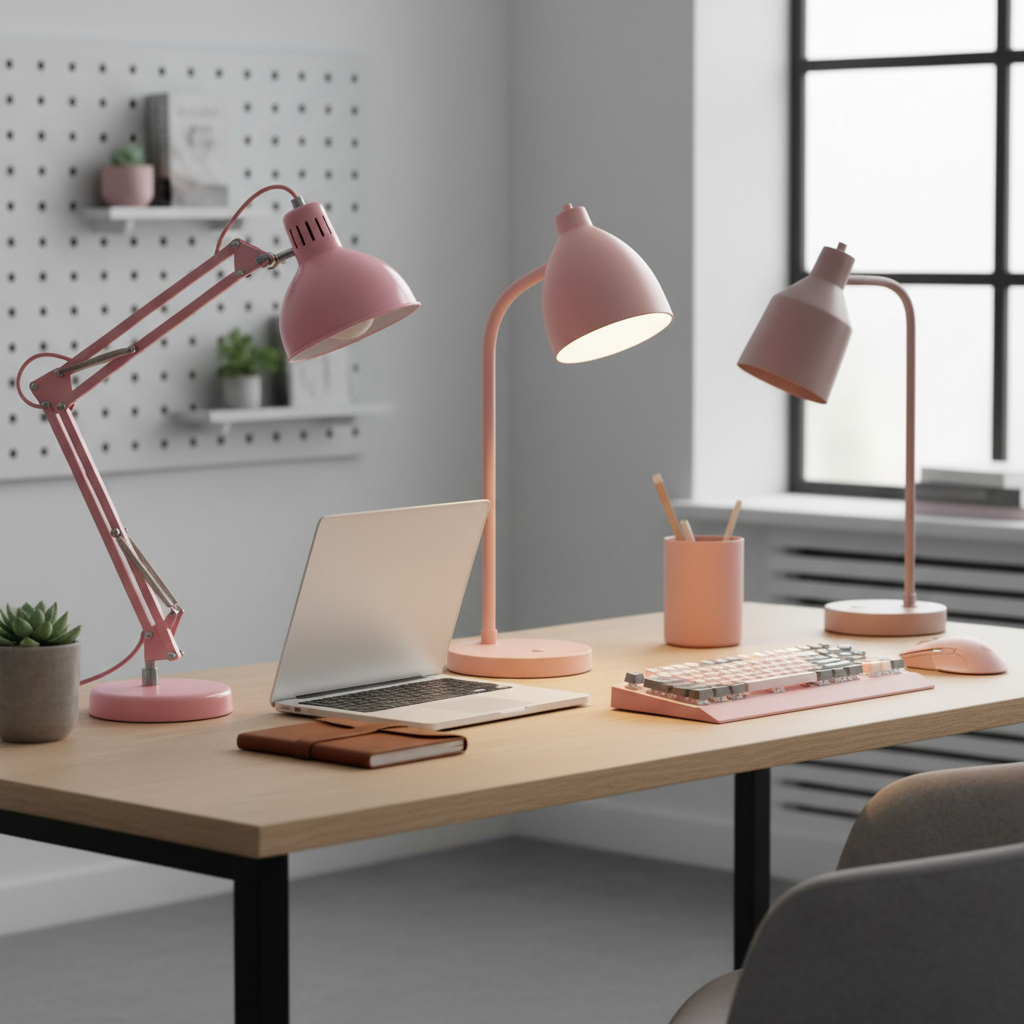
In an increasingly compact world, where every inch of desk space is precious, the choice of a desk lamp can significantly impact your productivity and the overall aesthetic of your workspace. Do you constantly find yourself shuffling items to make room, or wishing for a cleaner, more organized setup? The dilemma often boils down to two primary types of desk lamps: the space-saving clamp-on and the traditional, versatile base stand. Understanding their fundamental differences, particularly how they manage space, is key to illuminating your work efficiently and elegantly. This guide will meticulously compare these lighting solutions, helping you decide which design truly brightens your work and saves you valuable desk real estate.
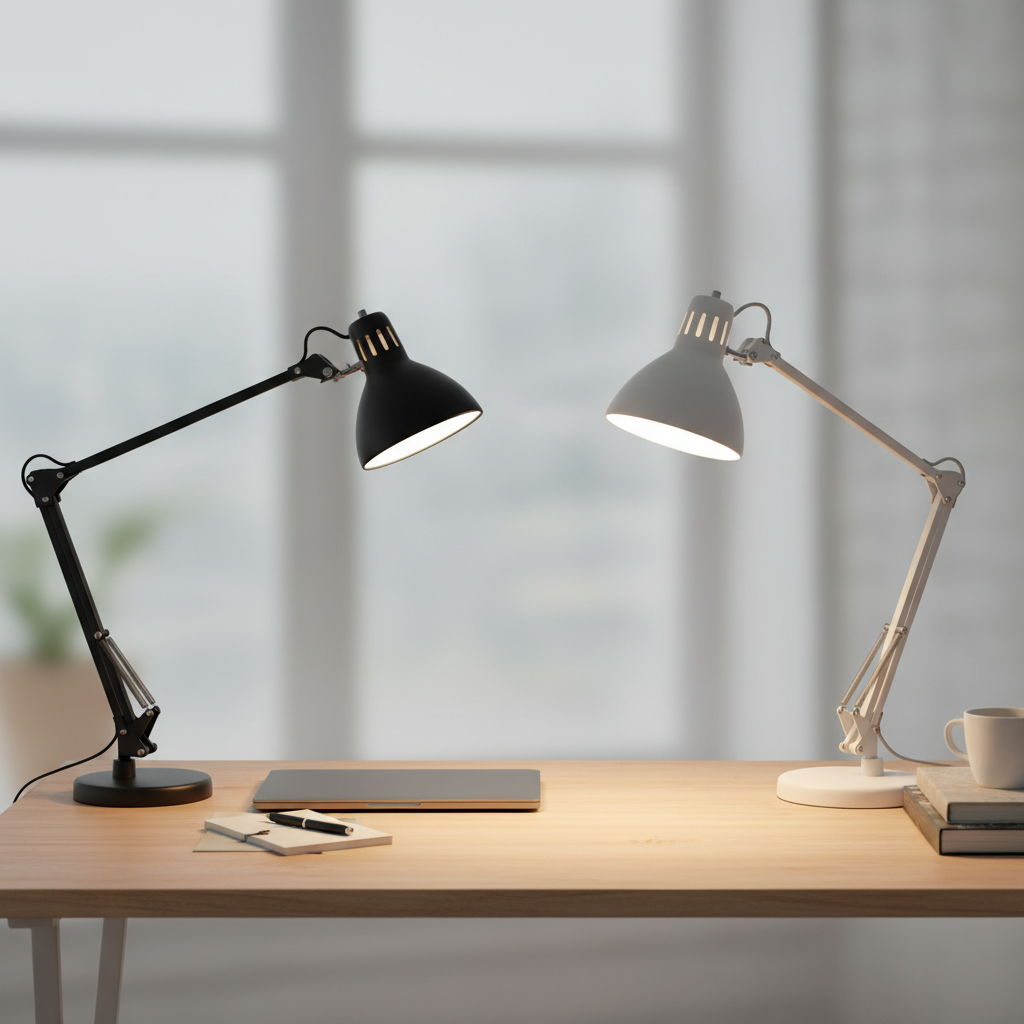
Unclutter Your Workspace: The Clamp-on Desk Lamp Solution
Clamp-on desk lamps are engineered with a singular mission: to provide illumination without occupying precious surface area. Instead of a bulky base, these innovative lamps feature a sturdy clamp mechanism that attaches directly to the edge of your desk, shelf, or even a monitor stand. This ingenious design immediately frees up the footprint traditionally consumed by a lamp base, making them a favorite for minimalist setups, small offices, and students with limited space.
Advantages: Maximizing Your Desk Real Estate
The benefits of a clamp-on desk lamp extend far beyond their inherent space-saving quality. They offer a unique blend of practicality and modern design that can transform your work environment.
- Zero Desk Footprint: This is the most significant advantage. By gripping the side or back of your desk, clamp-on lamps ensure your primary workspace remains entirely clear. This is invaluable for small desks, multi-monitor setups, or creative professionals who need every available surface for tools and materials.
- Enhanced Stability: Unlike some lightweight base stand lamps that can be easily knocked over, a well-secured clamp-on lamp provides superior stability. Once clamped, it stays firmly in place, offering consistent and unwavering light, which is especially beneficial for precision tasks.
- Superior Flexibility and Adjustability: Many clamp-on models feature highly articulated arms and rotating heads, often referred to as “architect lamps.” This design allows you to precisely direct light exactly where it’s needed, reducing glare and eye strain. You can pull the light closer for intricate work or push it back for broader illumination, adapting to various tasks with ease.
- Clean and Modern Aesthetics: The absence of a large base contributes to a sleek, minimalist look. Clamp-on lamps can blend seamlessly into modern desk setups, fostering an uncluttered and organized feel that enhances focus and visual appeal.
- Integrated Features: Some advanced clamp-on lamps come equipped with convenient features like USB charging ports or wireless charging pads built into the clamp or arm. These additions further reduce desktop clutter by eliminating the need for separate chargers and cables.
|
Our Picks for the Best Desk lamp in 2026
As an Amazon Associate I earn from qualifying purchases.
|
||
| Num | Product | Action |
|---|---|---|
| 1 | Voncerus LED Desk Lamp with Clamp, Eye-Caring Clip on Lights for Home Office, 3 Modes 10 Brightness, Long Flexible Goose-Neck, Metal, Swing Arm Architect Task Table Lamps with USB Adapter, Black |

|
| 2 | Motumen Led Desk Lamp for Home Office, Eye-Care Architect Light with Clamp, Smart Double Head Computer Monitor Table Clip Lamp, Adjustable Flexible Goose-Neck, 25 Lighting Models, Task Lamp, Black |
|
| 3 | CHARYJOD LED Desk Lamp for Office Home, Height Adjustable Architect Desk Light with USB Adapter, Stepless Dimming Desk Lamp Light for Reading, Study, Workbench |
|
| 4 | LED Desk Lamp with USB Ports,Touch Desk Lamps for Home Office with 5 Color Modes,3 Brightness Desk Light with Small Night Light,Reading Lamp Table Lamp for Bedroom Bedside Study Black (with adapter) |
|
| 5 | Fenmzee Bedside Table Lamp for Bedroom - 3 Way Dimmable Touch Lamp USB C Charging Ports and AC Outlet, Small Lamp Wood Base Round Flaxen Fabric Shade for Living Room, Desk, LED Bulb Included |
|
| 6 | 15W LED Desk Lamp with USB Charging Ports – Dimmable Table Lamp with 3 Color Temps, 5 Brightness, 4 Timers, Flexible Gooseneck Light with Base, Eye-Caring Reading Light for Home Office, Bedroom, Study |
|
| 7 | Airlonv LED Desk Lamp for Office Home, Eye-Caring Desk Light with Stepless Dimming Adjustable Flexible Gooseneck, 10W USB Adapter Desk Lamp with Clamp for Reading, Study, Workbench (Black) |
|
| 8 | Sailstar Desk Lamp, LED Desk Lamps for Home Office, Wireless Charger Small Desk Lamp with Pen Holder, 3 Color Modes, Dimmable, CRI 85, 800LM, Study Lamps for College Dorm Room, Adapter Included, Black |
|
| 9 | BOHON LED Desk Lamp with USB Charging Port 3 Color Modes Dimmable Reading Light Intelligent Induction Auto Dimming Task Lamp Neck Flexible Table Lamp for Bedside Office, AC Adapter Include |
|
| 10 | Micomlan Led Desk Lamp with Clamp, Architect Desk Lamp for Home Office with Atmosphere Lighting, 24W Ultra Bright Auto Dimming Computer Light Stepless Dimming and Tempering LED Table Light |
|
Considerations: Where Clamp-on Lamps Excel and Fall Short
While clamp-on lamps are excellent space-savers, they aren’t without their specific considerations.
- Desk Compatibility: The effectiveness of a clamp-on lamp hinges on your desk’s design. It requires a suitable edge for clamping, which means desks with very thick edges, rounded profiles, or those without any overhang may not be compatible. Ensure the clamp strength and opening size match your desk’s dimensions to prevent instability or damage.
- Limited Mobility (Once Fixed): While the lamp head and arm are highly adjustable, the lamp’s base (the clamp) is generally meant to be a semi-permanent fixture. Moving the entire lamp to a different surface or location can be more involved than simply lifting a base stand lamp.
- Potential for Desk Damage: A poor-quality clamp or improper installation can potentially scratch or dent your desk surface, especially if it’s made of softer materials like wood. Look for clamps with protective padding.
Exploring the Classic: Base Stand Desk Lamps
The base stand desk lamp represents the traditional approach to task lighting. Characterized by a weighted base that rests directly on your desk surface, these lamps have been a staple in homes and offices for decades. Their enduring popularity stems from their simplicity, wide array of designs, and immediate functionality.
Advantages: Versatility and Traditional Appeal
Base stand lamps, often referred to as portable desk lamps, offer a different set of benefits, prioritizing mobility and aesthetic integration within a room.
- Placement Flexibility: The most apparent advantage of a base stand lamp is its ability to be placed almost anywhere there’s a flat surface and an outlet. You can easily reposition it on your desk, move it to a bedside table, or even use it on a console in another room, offering unparalleled portability.
- Instant Setup: There’s no installation required beyond plugging it in. This “plug-and-play” nature makes base stand lamps incredibly convenient for temporary lighting needs or for those who frequently rearrange their workspace.
- Vast Design Variety: Base stand lamps come in an almost limitless range of styles, materials, and sizes. From classic banker’s lamps to modern minimalist designs, you can find a base stand lamp to complement any decor, often serving as a decorative accent in addition to a light source.
- Independent Lighting: They don’t rely on the structural integrity or design of your desk, making them suitable for any desk type, including glass tops or desks with irregular edges where a clamp-on lamp wouldn’t work.
Considerations: The Footprint Factor and Other Trade-offs
The primary drawback of a base stand desk lamp, especially in the context of space-saving, is its physical footprint.
- Occupies Desk Space: The most obvious disadvantage is that the base, no matter how compact, consumes a portion of your valuable desk surface. For small desks, this can quickly lead to a cluttered feeling, leaving less room for books, documents, or personal items.
- Stability Concerns: While many base stand lamps feature adequately weighted bases, lighter or more slender designs can be prone to tipping over if accidentally bumped. This can be a concern in busy environments or homes with pets and children.
- Limited Reach and Adjustability: While many base stand lamps offer adjustable necks or arms, their range of motion might be more restricted than a multi-jointed clamp-on lamp. The light source is tied to the position of the base, limiting how far and wide the light can be directed without moving the entire unit.
- Aesthetic Impact: A large or visually heavy base can sometimes overwhelm a small desk or clash with a minimalist aesthetic, potentially making the workspace feel heavier and less open.
Clamp-on vs. Base Stand: A Side-by-Side Space-Saving Showdown
Let’s break down the core differences between these two popular desk lamp types, with a strong focus on their space-saving implications.
| Comparison Factor | Clamp-on Desk Lamp | Base Stand Desk Lamp |
|---|---|---|
| Desk Footprint | Zero – Attaches to the edge, freeing up all surface area. Ideal for maximizing space. | Significant – Requires desk space for its base, impacting available surface area. |
| Stability | Firmly fixed once clamped, offering high stability against accidental bumps. | Can be stable if weighted well, but lighter models are prone to tipping. |
| Adjustability | Often features highly flexible, multi-jointed arms for precise, wide-ranging light direction. | Varies; some offer good flexibility, others have limited adjustment range tied to base position. |
| Portability | Less portable once installed; designed for fixed workstations. | Highly portable; easy to move around the desk or to different rooms. |
| Aesthetics | Sleek, minimalist, contributes to an uncluttered look. | Wide range of styles, can be a decorative element; some designs may feel bulky on small desks. |
| Installation | Requires careful clamping to a suitable desk edge; can be more involved. | Plug-and-play; no installation required. |
| Ideal Use Cases | Small desks, multi-monitor setups, crafting, drawing, permanent workstations where space is critical. | Larger desks, temporary lighting needs, reading nooks, or when mobility and diverse styling are priorities. |
Choosing Your Perfect Illumination: Factors Beyond Just Space
While space-saving is a key factor, selecting the right desk lamp involves a holistic consideration of your needs and environment.
Workspace Layout and Desk Type
Before anything else, assess your desk. Do you have a thin, sturdy edge for a clamp? Is your desk free-standing or against a wall? Clamp-on lamps are excellent for rectangular desks with suitable edges, allowing them to provide stable, fixed lighting. If your desk has an irregular shape, no suitable edge, or is made of delicate material, a base stand lamp might be the safer and more practical choice. Consider the overall size of your workspace. For truly compact areas, a clamp-on is often the undisputed champion of space efficiency.
Task-Specific Lighting Needs
Think about what you’ll be doing under the lamp. For detailed work like crafting, intricate drawing, or long hours of computer use, precise and adjustable lighting is paramount. Many clamp-on lamps, especially those with articulated “architect” arms, excel at directing light exactly where it’s needed, minimizing shadows and reducing eye strain. If your needs are more casual, perhaps for general ambient light or occasional reading, a base stand lamp with a simpler design might suffice.
Desired Flexibility and Mobility
Do you frequently reconfigure your workspace, or do you need to move your lamp from your desk to another surface, like a workbench or a bedside table? If high mobility is a priority, a lightweight base stand lamp is the clear winner. Its simple plug-and-play nature allows for instant repositioning. However, if your setup is largely permanent and you value a consistently clear desk, the fixed stability of a clamp-on lamp is ideal.
Aesthetics and Design Integration
Your desk lamp should not only be functional but also complement your personal style and the overall decor of your room. Clamp-on lamps often lean towards modern, minimalist, or industrial designs, offering a clean, unobtrusive look. Base stand lamps, on the other hand, provide an expansive range of styles, from vintage to contemporary, allowing you to make a more pronounced decorative statement. Consider how the lamp’s design, materials, and color will integrate with your existing furniture and accessories.
Budget and Build Quality
Like any investment, the quality of your desk lamp matters. A higher-quality lamp, whether clamp-on or base stand, will typically offer better light performance, greater durability, and more reliable adjustability. Look for metal construction over flimsy plastic, especially for the arm and clamp components, as this contributes to longevity and prevents sagging over time. While clamp-on lamps can sometimes be more expensive due to their complex articulated arms, there are excellent options in both categories across various price points.
Conclusion
Choosing between a clamp-on and a base stand desk lamp ultimately comes down to a careful evaluation of your specific workspace, task requirements, and personal preferences. If maximizing every square inch of your desk is a top priority, and your desk supports it, a clamp-on lamp offers an unparalleled space-saving solution, delivering stable, highly adjustable illumination without clutter. However, if you value effortless portability, a wider array of decorative styles, and a simpler setup, a base stand lamp remains a versatile and appealing choice, provided you have the surface area to spare. Both types excel in their own right; the perfect lamp is the one that seamlessly integrates into your daily life, enhances your productivity, and helps you create an environment where ideas can truly shine.
Which type of desk lamp will you choose to redefine your workspace?
Frequently Asked Questions
Are clamp-on desk lamps stable enough for active workspaces?
Yes, well-designed clamp-on desk lamps, especially those with strong, padded clamps and robust metal construction, are highly stable. They attach firmly to the desk edge, preventing accidental tipping common with some base stand models, making them ideal for active or busy workspaces.
Can I use a clamp-on desk lamp on any desk?
Not necessarily. Clamp-on lamps require a desk or surface with a suitable edge for the clamp to grip. Desks with very thick tops, rounded edges, or those made of fragile materials may not be compatible. Always check the clamp’s maximum opening and ensure it has protective padding.
Do base stand lamps always take up a lot of space?
While base stand lamps always occupy some desk surface, their footprint varies. Compact models with small, weighted bases are available. However, they will invariably consume more usable desk area than a clamp-on lamp, which effectively hovers above the surface.
Which type of lamp offers better adjustability for task lighting?
Many clamp-on lamps, particularly those with multi-jointed “architect” arms, offer superior adjustability, allowing for precise positioning of light over a wide range. While some base stand lamps have flexible necks, their range can be more limited compared to the expansive reach of a high-quality clamp-on design.
Are there aesthetic benefits to one type over the other?
Aesthetically, clamp-on lamps often provide a cleaner, more minimalist look by keeping the desk surface uncluttered. Base stand lamps offer a broader spectrum of decorative styles, allowing them to serve as a design statement. The “better” aesthetic depends on your personal taste and room decor.