Do you often find yourself squinting at your computer screen, experiencing eye fatigue, or battling persistent headaches after a long day at your desk? You’re not alone. Screen glare is a common culprit behind these discomforts, transforming your productive workspace into a source of strain. Fortunately, mastering the art of desk lamp placement and choosing the right lighting features can dramatically alleviate this issue, turning your workstation into a haven of visual comfort and efficiency. It’s about creating an oasis of light that not only brightens your task but also protects your eyes and boosts your mood and productivity.
Understanding Screen Glare and Its Impact
Before we dive into solutions, let’s clarify what screen glare is. Glare occurs when unwanted light, either direct or reflected, interferes with your clear vision. Direct glare happens when a bright light source shines straight into your eyes. Reflected glare, more common with screens, is when light bounces off a glossy surface, like your monitor, into your line of sight.
The consequences of persistent screen glare extend beyond mere annoyance. It can lead to a range of issues including blurred vision, eye strain, dryness, headaches, and even neck and shoulder pain as you unconsciously adjust your posture to compensate. Over time, this cumulative strain can significantly reduce your concentration and overall productivity. Addressing glare isn’t just about comfort; it’s about safeguarding your long-term eye health and enhancing your work performance.
Strategic Desk Lamp Placement for Glare Reduction
The positioning of your desk lamp is perhaps the most critical factor in mitigating screen glare. It’s an art of directing light where you need it most—on your documents or keyboard—without letting it reflect off your screen or shine directly into your eyes.
The 45-Degree Rule and Side Placement
|
Our Picks for the Best Desk lamp in 2026
As an Amazon Associate I earn from qualifying purchases.
|
||
| Num | Product | Action |
|---|---|---|
| 1 | Fenmzee Bedside Table Lamp for Bedroom - 3 Way Dimmable Touch Lamp USB C Charging Ports and AC Outlet, Small Lamp Wood Base Round Flaxen Fabric Shade for Living Room, Desk, LED Bulb Included |

|
| 2 | Sailstar Desk Lamp, LED Desk Lamps for Home Office, Wireless Charger Small Desk Lamp with Pen Holder, 3 Color Modes, Dimmable, CRI 85, 800LM, Study Lamps for College Dorm Room, Adapter Included, Black |
|
| 3 | LED Desk Lamp with USB Ports,Touch Desk Lamps for Home Office with 5 Color Modes,3 Brightness Desk Light with Small Night Light,Reading Lamp Table Lamp for Bedroom Bedside Study Black (with adapter) |
|
| 4 | CHARYJOD LED Desk Lamp for Office Home, Height Adjustable Architect Desk Light with USB Adapter, Stepless Dimming Desk Lamp Light for Reading, Study, Workbench |
|
| 5 | 15W LED Desk Lamp with USB Charging Ports – Dimmable Table Lamp with 3 Color Temps, 5 Brightness, 4 Timers, Flexible Gooseneck Light with Base, Eye-Caring Reading Light for Home Office, Bedroom, Study |
|
| 6 | Voncerus LED Desk Lamp with Clamp, Eye-Caring Clip on Lights for Home Office, 3 Modes 10 Brightness, Long Flexible Goose-Neck, Metal, Swing Arm Architect Task Table Lamps with USB Adapter, Black |
|
| 7 | Motumen Led Desk Lamp for Home Office, Eye-Care Architect Light with Clamp, Smart Double Head Computer Monitor Table Clip Lamp, Adjustable Flexible Goose-Neck, 25 Lighting Models, Task Lamp, Black |
|
| 8 | Micomlan Led Desk Lamp with Clamp, Architect Desk Lamp for Home Office with Atmosphere Lighting, 24W Ultra Bright Auto Dimming Computer Light Stepless Dimming and Tempering LED Table Light |
|
| 9 | Airlonv LED Desk Lamp for Office Home, Eye-Caring Desk Light with Stepless Dimming Adjustable Flexible Gooseneck, 10W USB Adapter Desk Lamp with Clamp for Reading, Study, Workbench (Black) |
|
| 10 | BOHON LED Desk Lamp with USB Charging Port 3 Color Modes Dimmable Reading Light Intelligent Induction Auto Dimming Task Lamp Neck Flexible Table Lamp for Bedside Office, AC Adapter Include |
|
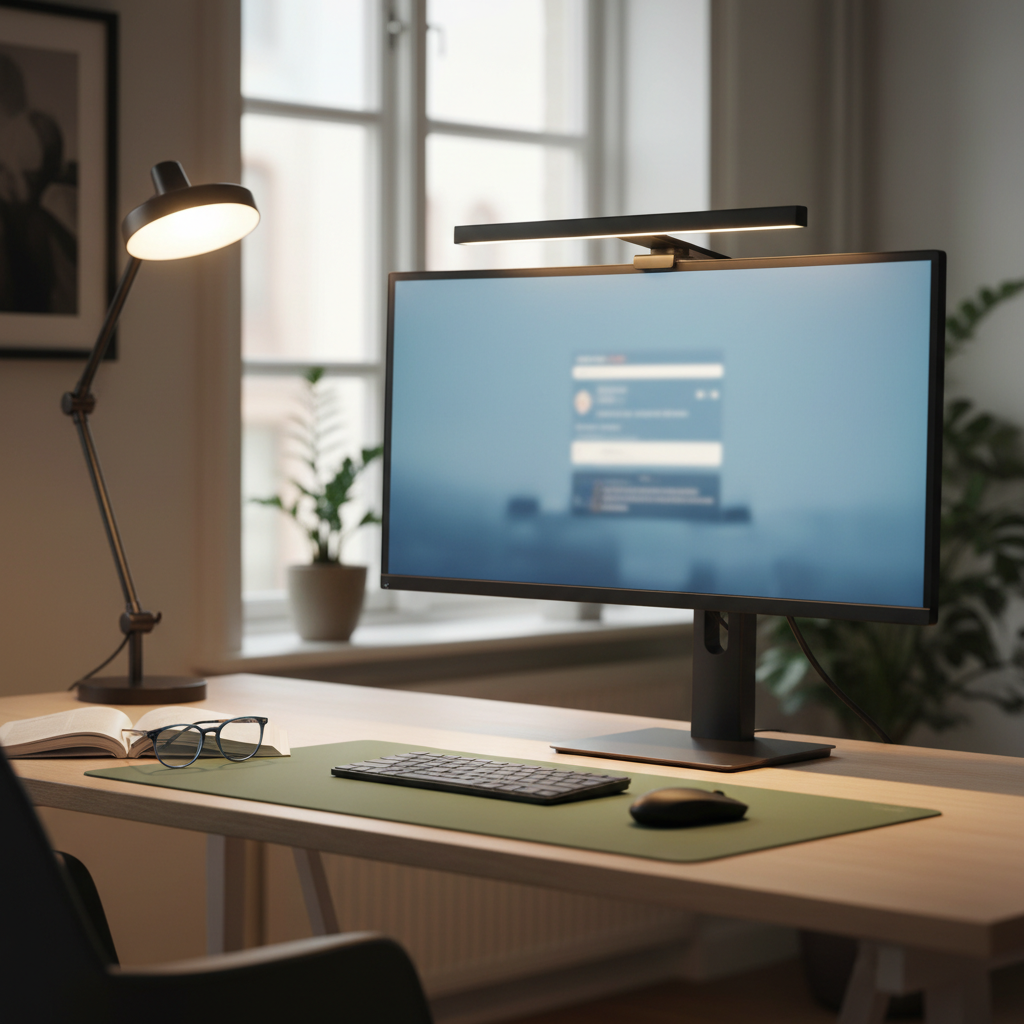
A highly effective strategy is to position your desk lamp at a 45-degree angle to your monitor, roughly 20 inches to the side or behind it. If you’re right-handed, place the lamp on your left, and if you’re left-handed, position it on your right. This setup helps prevent shadows from being cast by your dominant hand as you write or work. The goal is for the light to illuminate your immediate workspace, like your keyboard, mouse, and any physical documents, rather than directly hitting your screen or reflecting into your eyes. This strategic angle ensures the light is reflected off a surface away from your gaze, enhancing visual comfort.
Indirect Lighting: Bouncing Light Off Surfaces
Consider lamps that offer indirect lighting. Instead of having a direct beam aimed at your desk, these lamps can be angled to bounce light off a nearby wall or the ceiling. This creates a softer, more diffused ambient light that reduces harsh contrasts between your screen and the surrounding environment, thereby minimizing glare and eye strain. When the light is aimed at your task, not your screen, it significantly improves visibility without causing problematic reflections.
Avoiding Direct Light on Screen and Eyes
This might seem obvious, but it’s often overlooked. Ensure your desk lamp’s light source is above or behind your line of sight, never directly in front of your eyes. The light should also never shine directly onto your computer screen. If you notice any reflections on your monitor after positioning your lamp, adjust its angle or the monitor’s tilt until the glare is completely eliminated. Adjustable lamps with opaque shades are excellent for this, allowing you to precisely control the light direction.
Optimizing for Multi-Monitor Setups
For workstations with multiple monitors, preventing glare requires a thoughtful approach. A single, well-placed swing-arm desk lamp can often distribute light evenly across a wider area without directing light onto the screens. However, if using multiple task lights, ensure each is positioned to avoid cross-glare between monitors or reflections on any screen. The principle remains the same: illuminate your work area indirectly and avoid direct light on any display surface.
Essential Desk Lamp Features for Glare Control
Beyond placement, the features of your desk lamp play a crucial role in its anti-glare effectiveness. Modern desk lamps offer innovations specifically designed to protect your eyes from unwanted reflections.
Asymmetric Lighting Technology (Light Bars)
One of the most advanced solutions is lamps with asymmetric lighting, often found in monitor light bars. These innovative lights are designed to illuminate your desk surface and keyboard without shining any light onto the screen itself. They achieve this by projecting light at a specific angle that avoids screen reflection entirely. This creates a comfortable, evenly lit workspace without adding to screen glare, a significant advantage over traditional lamps.
- Pros: Highly effective at preventing screen glare, saves desk space (when mounted on monitor), even illumination.
- Cons: Can be more expensive, specific design might not fit all aesthetic preferences.
Adjustable Arms and Heads (Swing-Arm Lamps)
Versatility is key for glare reduction. Lamps equipped with highly adjustable arms and heads, such as swing-arm designs, allow for precise control over the light’s direction and height. This flexibility enables you to quickly reposition the light source to eliminate glare as your tasks change or as natural light shifts throughout the day. You can pull the light closer for detailed work or push it back for a wider spread, always ensuring the beam avoids your screen.
- Pros: Maximum flexibility in positioning, ideal for various tasks, prevents shadows.
- Cons: Can take up more desk space than light bars, requires manual adjustment.
Dimmable Brightness and Color Temperature Control
The ability to control both brightness (lumens) and color temperature (Kelvin) is invaluable for combating glare and eye strain.
-
Dimmable Brightness: Being able to dim your lamp allows you to match the ambient light levels in your room, preventing the lamp from becoming an overpowering light source that causes glare. A lamp with moderate brightness is always preferable if dimming isn’t an option.
-
Color Temperature: For computer work, a neutral white light around 3500K is often recommended. Warmer tones (around 2700K-3000K) are more relaxing for reading, while cooler tones (above 4000K) can enhance focus for writing. Opt for lamps that allow you to adjust between these temperatures, as harsh blue light can be more straining on the eyes.
-
Pros: Customizability for different tasks and times of day, reduces eye strain from incorrect light intensity or color.
-
Cons: Higher initial cost for advanced models, cheaper versions might have limited ranges.
Integrated Diffusers and Frosted Bulbs
To soften the light and prevent harsh shadows or hotspots, look for desk lamps with integrated diffusers or use bulbs with a frosted finish. Diffusers spread the light more evenly across your workspace, making it less intense and reducing the likelihood of glare. LED bulbs with frosted covers are excellent for this, providing smooth, uniform illumination that is gentler on your eyes.
- Pros: Softer light, reduces harshness, minimizes direct glare from the bulb itself.
- Cons: Can slightly reduce total light output compared to clear bulbs, some diffusers may be aesthetically unappealing to certain users.
Beyond the Lamp: A Holistic Approach to Glare-Free Workspaces
While your desk lamp is a powerful tool, achieving a truly glare-free environment often requires a holistic approach, considering all light sources in your workspace.
Managing Ambient Room Lighting
Excessive overhead lighting or bright windows can be major contributors to screen glare. Where possible, reduce overhead lighting or use dimmer switches. For windows, ensure you have appropriate coverings like blinds or shades. You may need to adjust these throughout the day as the sun shifts to prevent glare from natural light. The key is to create balanced illumination that avoids stark contrasts.
Optimizing Monitor Settings and Anti-Glare Solutions
Don’t forget your monitor itself! Fine-tuning your screen’s contrast and brightness can significantly improve viewing comfort. Experiment with these settings to achieve clarity without blurring or excessive brightness. Additionally, anti-glare filters can be applied directly to your screen, although some may slightly reduce color accuracy. Monitor tilt and swivel functions are also your allies; adjust your screen’s angle to deflect any remaining light sources causing reflection.
Choosing Glare-Resistant Work Surfaces
The surface of your desk can also play a role. Glossy or highly reflective desk surfaces can bounce light onto your screen or into your eyes, exacerbating glare. Opt for matte or textured finishes for your desk and accessories. These materials absorb light rather than reflecting it, creating a much more visually comfortable environment.
The Role of Bias Lighting (Monitor Backlight)
While not a desk lamp per se, bias lighting—LED strips placed behind your monitor—can be a surprisingly effective complement to your anti-glare efforts. By creating a soft glow behind your screen, bias lighting reduces the contrast between the bright monitor and a dark wall, lessening eye strain and improving perceived screen quality. This subtle ambient light contributes to a more comfortable mid-luminance surround, which experts suggest can lower ocular fatigue.
Choosing Your Ideal Anti-Glare Desk Lamp: A Buyer’s Guide
Selecting the perfect desk lamp for glare reduction involves a combination of understanding your needs and knowing what features to look for.
Assessing Your Specific Needs and Workspace
Consider what you primarily use your desk for. Is it intense coding, graphic design, reading, or a mix of tasks? How much space do you have? For small workspaces, clip-on lamps or monitor light bars are excellent space-saving options. For a larger desk, an articulating swing-arm lamp might offer more flexibility. Think about the existing light in your room and how your new lamp will integrate.
Key Features to Prioritize
When shopping, prioritize the following:
- Adjustability: Look for flexible arms, swiveling heads, and height adjustment.
- Asymmetric Lighting: Especially beneficial for computer users to avoid screen reflection.
- Dimmability: Essential for adapting brightness to different times of day and tasks.
- Color Temperature Control: Allows you to switch between warm, neutral, and cool light for various activities and comfort.
- Diffused Light: Lamps with shades, frosted bulbs, or built-in diffusers to soften the light.
- Stable Base/Clamp: Ensures the lamp stays securely in its intended position.
Understanding Light Specifications (Lumens, Kelvin)
- Lumens: This measures the total amount of visible light from a lamp. For general desk work, 300-500 lumens is often sufficient. Too many lumens can cause excessive brightness and contribute to glare.
- Kelvin (K): This measures color temperature. As mentioned, 2700K-4000K is generally recommended for workspaces, with 3500K being a good mid-range for computer use. Avoid very cool or blue light (5000K+) for extended periods, as it can be harsher on the eyes.
Budget vs. Performance Considerations
Anti-glare desk lamps come in a wide range of prices. While budget-friendly options exist, investing in a lamp with advanced features like asymmetric lighting and precise color temperature control can significantly enhance your comfort and productivity in the long run. Consider it an investment in your eye health and well-being.
Where to Find the Best Anti-Glare Lamps
You can find suitable desk lamps at electronics retailers, office supply stores, and online marketplaces. Many specialized lighting brands also offer models designed with ergonomic and anti-glare features in mind. Always check reviews focusing on glare reduction and adjustability before making a purchase.
Comparing Desk Lamps for Glare Control: What to Look For
To help you navigate the options, here’s a comparison of common desk lamp types and their suitability for glare reduction.
| Feature | Monitor Light Bar | Articulating Swing-Arm Lamp | Basic Dimmable Desk Lamp |
|---|---|---|---|
| Glare Control | Excellent (Asymmetric light) | Very Good (Precise positioning) | Good (Brightness control) |
| Space Saving | Excellent (Mounts on monitor) | Moderate (Can extend) | Varies (Typically on desk) |
| Adjustability | Brightness, Color Temperature | Height, Angle, Direction | Brightness |
| Light Diffusion | Built-in | Varies (Shade required) | Varies (Shade/bulb type) |
| Color Temp Range | Wide (e.g., 2700K-6500K) | Bulb dependent (Often fixed) | Bulb dependent (Often fixed) |
| Price Range | Higher | Mid-range to High | Low to Mid-range |
| Key Benefit | Zero screen reflection | Ultimate positional control | Simple brightness adjustment |
Conclusion
Eliminating screen glare with the right desk lamp is a transformative step towards a healthier, more productive workspace. By understanding the nature of glare, strategically placing your lamp, and choosing models with glare-reducing features like asymmetric lighting, adjustability, and customizable brightness and color temperature, you can create an environment that supports your eyes and enhances your focus. Remember to also manage ambient lighting, optimize monitor settings, and select matte work surfaces for a truly holistic approach.
The right lighting isn’t just a functional necessity; it’s a vital component of your daily well-being and efficiency. So, take a moment to evaluate your current setup and make the necessary adjustments. Your eyes will thank you, and you’ll likely find your productivity soaring. What small change will you make today to reduce screen glare and improve your workspace?
Câu Hỏi Thường Gặp
How far should a desk lamp be from a computer screen to prevent glare?
Ideally, a desk lamp should be positioned about 20 inches to the side or behind your monitor, angled at 45 degrees, to prevent direct light from hitting the screen and causing glare. This setup ensures your work area is illuminated without creating reflections.
What color light helps reduce eye strain from screens?
Neutral white light, typically around 3500K, is often recommended for computer work as it provides good visibility without being too harsh. Avoid overly cool or blue light for extended periods, as it can contribute to eye strain.
Are monitor light bars effective for reducing glare?
Yes, monitor light bars are highly effective for reducing screen glare. Their asymmetric optical design illuminates the desk and keyboard directly below, specifically directing light away from the screen to prevent reflections and enhance visual comfort.
Can any desk lamp reduce screen glare?
While any desk lamp can be positioned to minimize direct glare, those with adjustable arms, dimmable brightness, and especially asymmetric lighting technology are far more effective. Lamps that provide diffused light or allow for color temperature control also offer superior glare reduction.
Should my desk lamp be brighter or dimmer than my computer screen?
Your desk lamp should ideally provide balanced illumination that is not significantly brighter than your computer screen. Excessive brightness from your lamp can create harsh contrasts and contribute to glare. Dimmable lamps allow you to match the light level to your screen and ambient room light for optimal comfort.