For every passionate sewer, quilter, or needlework artist, the battle against eye strain and miscolored threads is a familiar one. While your skills and tools are paramount, the unsung hero of precision crafting is undoubtedly your lighting. In the intricate world of stitches, fabrics, and delicate details, optimal illumination transforms a challenging task into a joyful, effortless experience. As we look to 2026, advancements in lighting technology offer more sophisticated and ergonomic solutions than ever before, promising clearer vision, accurate color matching, and extended crafting sessions without fatigue. This comprehensive guide will illuminate the crucial factors in selecting the perfect lamp, explore the leading technologies, and recommend top models to brighten your creative journey.
Why Exceptional Lighting Matters for Sewing and Needlework
Poor lighting is a silent saboteur of creativity. It forces your eyes to work harder, leading to quick fatigue, headaches, and ultimately, a diminished enjoyment of your craft. When working with fine threads, intricate patterns, or subtle fabric shades, inadequate light can cause costly errors, from mismatched colors to crooked stitches. Proper illumination, however, provides a clear, shadow-free view of your workspace, enhancing precision and allowing you to discern every detail with ease. It’s the difference between guessing a thread color and seeing its true hue, ensuring your finished pieces reflect your vision perfectly.
Key Lighting Technologies for Crafters
The evolution of lighting has brought significant benefits to crafters. Understanding the core technologies will help you make an informed choice.
LED Efficiency
|
Our Picks for the Best Desk lamp in 2026
As an Amazon Associate I earn from qualifying purchases.
|
||
| Num | Product | Action |
|---|---|---|
| 1 | Airlonv LED Desk Lamp for Office Home, Eye-Caring Desk Light with Stepless Dimming Adjustable Flexible Gooseneck, 10W USB Adapter Desk Lamp with Clamp for Reading, Study, Workbench (Black) |

|
| 2 | CHARYJOD LED Desk Lamp for Office Home, Height Adjustable Architect Desk Light with USB Adapter, Stepless Dimming Desk Lamp Light for Reading, Study, Workbench |
|
| 3 | Voncerus LED Desk Lamp with Clamp, Eye-Caring Clip on Lights for Home Office, 3 Modes 10 Brightness, Long Flexible Goose-Neck, Metal, Swing Arm Architect Task Table Lamps with USB Adapter, Black |
|
| 4 | Sailstar Desk Lamp, LED Desk Lamps for Home Office, Wireless Charger Small Desk Lamp with Pen Holder, 3 Color Modes, Dimmable, CRI 85, 800LM, Study Lamps for College Dorm Room, Adapter Included, Black |
|
| 5 | LED Desk Lamp with USB Ports,Touch Desk Lamps for Home Office with 5 Color Modes,3 Brightness Desk Light with Small Night Light,Reading Lamp Table Lamp for Bedroom Bedside Study Black (with adapter) |
|
| 6 | Motumen Led Desk Lamp for Home Office, Eye-Care Architect Light with Clamp, Smart Double Head Computer Monitor Table Clip Lamp, Adjustable Flexible Goose-Neck, 25 Lighting Models, Task Lamp, Black |
|
| 7 | Fenmzee Bedside Table Lamp for Bedroom - 3 Way Dimmable Touch Lamp USB C Charging Ports and AC Outlet, Small Lamp Wood Base Round Flaxen Fabric Shade for Living Room, Desk, LED Bulb Included |
|
| 8 | Micomlan Led Desk Lamp with Clamp, Architect Desk Lamp for Home Office with Atmosphere Lighting, 24W Ultra Bright Auto Dimming Computer Light Stepless Dimming and Tempering LED Table Light |
|
| 9 | 15W LED Desk Lamp with USB Charging Ports – Dimmable Table Lamp with 3 Color Temps, 5 Brightness, 4 Timers, Flexible Gooseneck Light with Base, Eye-Caring Reading Light for Home Office, Bedroom, Study |
|
| 10 | BOHON LED Desk Lamp with USB Charging Port 3 Color Modes Dimmable Reading Light Intelligent Induction Auto Dimming Task Lamp Neck Flexible Table Lamp for Bedside Office, AC Adapter Include |
|
Light Emitting Diodes (LEDs) have become the gold standard for craft lighting due to their superior efficiency and performance. LEDs offer brilliant, long-lasting illumination while consuming significantly less energy than traditional bulbs. Crucially for crafters, they emit very little heat, preventing discomfort during long sessions and safeguarding delicate materials from heat damage. Their consistent, flicker-free output also contributes to reduced eye strain, making them a comfortable and cost-effective choice.
Daylight Simulation: Color Temperature and CRI
Accurate color perception is non-negotiable in sewing and needlework. This is where color temperature and the Color Rendering Index (CRI) come into play.
-
Color Temperature (Kelvin – K): Measured in Kelvins, color temperature describes the warmth or coolness of light. For crafting, lamps that mimic natural daylight are ideal, typically falling within the 5000K-6500K range. This “daylight white” or “neutral white” light provides the most accurate representation of colors, preventing frustrating mismatches between threads and fabrics. Warmer, yellowish lights (2700K-3000K) can distort colors and lead to increased eye strain during detailed work. Many modern lamps offer adjustable color temperatures, allowing you to switch to warmer tones in the evening to avoid disrupting your natural sleep cycle.
-
Color Rendering Index (CRI): CRI measures how accurately a light source reveals the true colors of objects compared to natural daylight. For sewers, quilters, and designers, a CRI of 90 or higher is highly recommended. A high CRI ensures that the reds you see are truly red, and subtle fabric details are faithfully rendered, eliminating guesswork and enhancing the quality of your work. Many premium craft lamps, like those from OttLite, are renowned for their high CRI ratings.
Essential Features to Look for in a Sewing and Needlework Lamp
Beyond basic technology, several features elevate a good lamp to a great one for your crafting needs.
Brightness and Dimmability
High lumen output is essential for clarity, especially when working with dark fabrics or fine stitches. While ambient room lighting provides overall illumination, your task lamp needs to deliver focused brightness directly onto your work. For detailed textile work, aiming for at least 500 lux (lumens per square meter) on your work surface is a good rule of thumb. Equally important is the ability to dim the light. Different tasks and times of day require varying levels of intensity, and adjustable brightness helps prevent glare and eye fatigue during prolonged sessions.
Flexibility and Adjustability
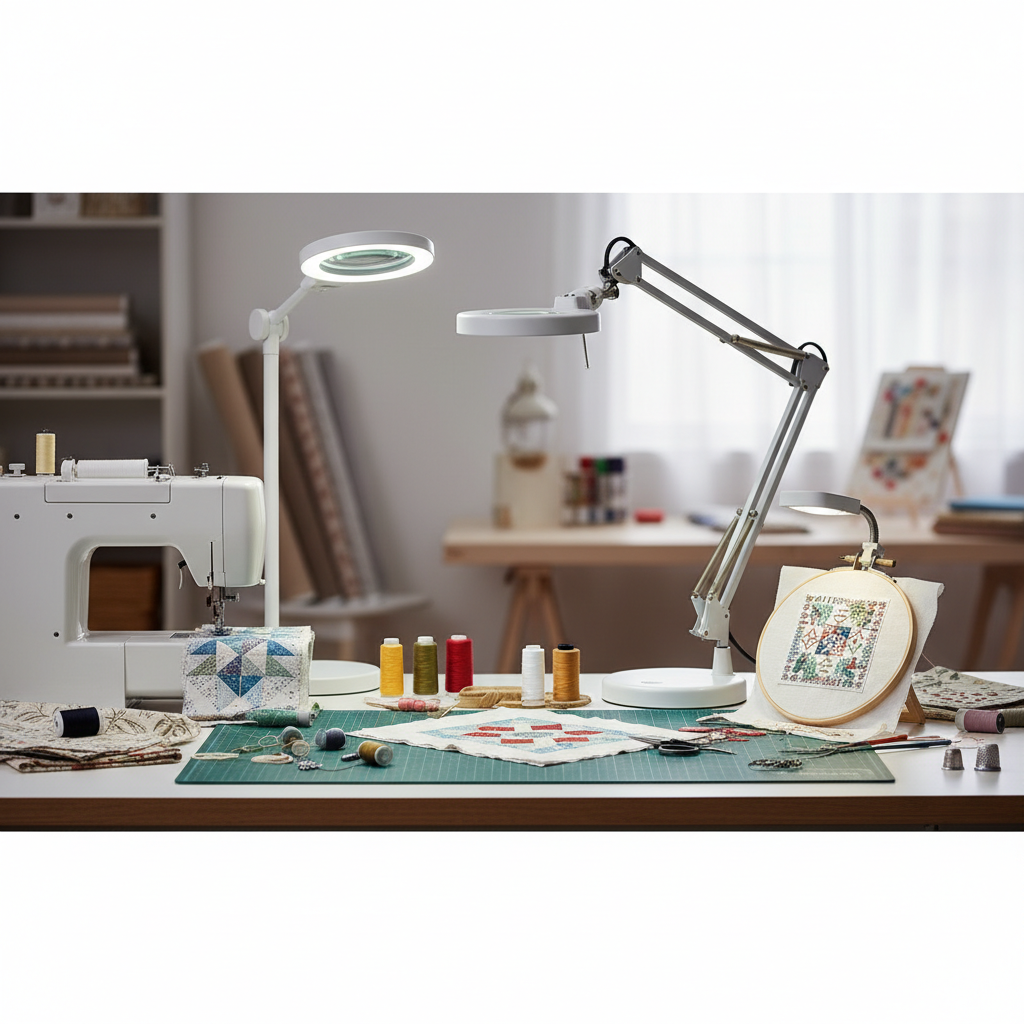
The ability to direct light precisely where you need it is paramount. Look for lamps with flexible goosenecks, multi-jointed arms, and adjustable heights. This allows you to position the light to eliminate shadows, reduce glare, and illuminate specific areas like your sewing machine needle, cutting mat, or embroidery hoop. Common mounting styles include stable tabletop bases, space-saving clamps that attach to your desk or machine, and magnetic bases for easy repositioning on metal surfaces.
Magnification
For intricate tasks such as threading fine needles, working with tiny beads, or executing detailed embroidery and cross-stitch, an integrated magnifying lens is a game-changer. Magnifying lamps reduce physical strain on your eyes and back, allowing for greater precision and longer periods of focused work. They bring small details into clear view, simplifying tasks that might otherwise cause frustration.
Ergonomics
Good lighting is a key component of an ergonomic workspace. Instead of leaning in and straining your neck and back to see your work, your lamp should provide enough clarity and focus that you can maintain a comfortable, upright posture. Combine good task lighting with an ergonomic chair and proper table height to minimize discomfort and maximize your crafting enjoyment. Some magnifying lamps also help achieve this by bringing the “work” closer to your eyes without you having to lean.
Popular Types of Lamps for Sewing and Needlework
The market offers a diverse range of lamps, each suited to different crafting needs and workspaces.
Dedicated Sewing Machine Lights
These compact lights are designed to attach directly to your sewing machine, illuminating the needle area and throat plate.
- Pros: Highly targeted illumination, eliminates shadows cast by the machine’s head, often very affordable.
- Cons: Limited reach beyond the machine, may not provide enough ambient light for larger projects.
- Ideal for: Any machine sewer looking to boost visibility at the needle, especially for intricate stitching or working with dark fabrics. LED strips and magnetic gooseneck lights are common examples.
Desk & Tabletop Lamps
These versatile lamps sit on your work surface, offering focused light.
- Pros: Portable (within a table), adjustable arms or necks for precise placement, available in many styles and features.
- Cons: Takes up desk space, may not provide wide enough illumination for very large projects like quilting.
- Ideal for: Smaller workspaces, hand-sewing, embroidery hoops, or as supplementary task lighting.
Floor Lamps
Standing independently, floor lamps provide broad illumination and can often be positioned over larger work areas.
- Pros: Excellent for illuminating larger cutting tables or quilting frames, can be easily moved around a dedicated sewing room, many models feature long, adjustable arms or even double heads for expansive light coverage.
- Cons: Can be more expensive, takes up floor space.
- Ideal for: Quilters, crafters with large work surfaces, or those needing flexible lighting that can serve multiple stations.
Magnifying Lamps
These lamps combine a light source with a magnifying lens, often on a flexible arm.
- Pros: Reduces eye strain for detailed work, provides exceptional clarity for fine stitches, beading, or intricate patterns.
- Cons: Can be bulky, the magnification might be too intense for some broad tasks, potentially more expensive.
- Ideal for: Fine embroidery, needlepoint, working with very small components, or anyone experiencing visual challenges.
Portable Lights (Clip-on & Neck Lights)
Designed for mobility, these lights are perfect for crafters on the go.
- Pros: Lightweight, often battery-powered and rechargeable, can be clipped onto frames, tables, or worn around the neck for hands-free illumination.
- Cons: Generally less powerful than stationary lamps, shorter battery life for continuous use.
- Ideal for: Travel, workshops, hand stitching on the sofa, or temporary lighting needs.
Top-Rated Lamps and Brands for 2026
The market for sewing and needlework lamps is thriving with innovative products. Here’s a look at some of the best, incorporating features and brands frequently praised in 2026 reviews.
| Lamp Type / Brand | Key Features | Price Range (Approx.) |
|---|---|---|
| Brightech LightView Pro Flex | 2-in-1 Magnifying Desk Lamp, adjustable gooseneck, dimmable LED, good for fine detail. | Mid-High |
| OttLite ClearSun LED Soft Touch | High CRI ClearSun LED, 3 brightness settings, replicates natural daylight, ergonomic design. | Mid-High |
| Daylight Company Slimline 4 | Long arm reach, clamp system saves space, high lux output, excellent for large areas, some offer 6500K. | High |
| Daylight Company Lumi Task Lamp | Large bar provides wide, even light, clamp option, two dimming settings, natural daylight glow. | High |
| Seaside Village Double-Head Floor Lamp | Ultra-bright (2000 lumens), two adjustable goosenecks, full-range dimming & color temp (5000K-6500K). | Mid-High |
| Madam Sew LED Sewing Machine Light Strip | Adhesive LED strip, magnetic attachment, targeted bright light for sewing machine. | Low |
| Purelight 4-in-1 Crafters Magnifying Lamp | Floor/desk/table lamp, 6500K daylight, 6-inch magnifier, chart holder, accessories tray. | Mid |
| ViviLux LED Craft & Sewing Light | Cordless, 1200 lumens, rechargeable, adjustable. | Mid |
| Skyleo LED Desk Lamp with Clamp | Affordable, 3 light modes (3000K-6000K), 10 brightness levels, flicker-free, anti-glare. | Low |
“The right lighting isn’t just about seeing better; it’s about translating your creative vision into reality with unwavering accuracy and comfort.” – Admin, ReviewsBR.com, Technical Expert in Desk Lamps.
Choosing the Perfect Lamp: A Step-by-Step Guide
With so many excellent options, finding your ideal lamp can feel daunting. Here’s a streamlined approach:
-
Assess Your Primary Craft:
- Machine Sewing: Prioritize targeted illumination for the needle area and a broader light for your immediate workspace.
- Hand Needlework (Embroidery, Cross-Stitch): High CRI for color accuracy and often magnification are critical. Portable options might also be useful.
- Quilting (Cutting & Large Projects): Wide, even light coverage from a floor lamp or long-arm desk lamp is essential.
-
Evaluate Your Workspace:
- Size: Small desks benefit from clamp-on or compact tabletop lamps. Large studios can accommodate floor lamps or multiple task lights.
- Existing Light: Identify any dark spots or areas prone to shadows. Consider where natural light enters and how it changes throughout the day.
- Power Outlets: Ensure easy access for powered lamps or consider rechargeable cordless options for flexibility.
-
Prioritize Key Features:
- Color Accuracy: If color matching is crucial, a high CRI (90+) and 5000K-6500K color temperature are paramount.
- Dimmability & Adjustability: Essential for adapting to different tasks and reducing eye strain over time.
- Magnification: A must-have for very fine detail work or if you need visual assistance.
- Portability: If you move your craft between locations or rooms, a lightweight, cordless option is invaluable.
-
Set a Realistic Budget: Quality craft lighting is an investment in your craft and your eye health. While budget-friendly options exist, investing in a lamp with superior features like high CRI and robust adjustability will pay dividends in comfort and quality.
-
Consider Brand Reputation and Warranty: Reputable brands like Daylight Company, OttLite, and Stella Lighting are known for their quality and durability. Check warranties for long-term peace of mind.
Conclusion
The journey of creating beautiful sewing and needlework projects is deeply personal and incredibly rewarding. Don’t let inadequate lighting diminish that experience. By understanding the critical role of lumens, color temperature, and CRI, and by choosing a lamp with the right adjustability and features, you can transform your workspace into a haven of clarity and comfort. Investing in the best lamps for sewing and needlework in 2026 means investing in your passion, extending your crafting hours, and ensuring every stitch is a testament to your skill and vision. Say goodbye to squinting and hello to illuminated creativity – your eyes and your projects will thank you.
What new possibilities will clear, comfortable lighting unlock for your next masterpiece?
Frequently Asked Questions
How bright should a lamp for sewing or needlework be?
For optimal visibility and reduced eye strain, your task lamp should provide at least 500 lux (lumens per square meter) directly on your work surface. Look for lamps with high lumen output and dimmable settings to adjust intensity as needed.
What color temperature is best for accurate color matching in sewing?
A color temperature between 5000K and 6500K is ideal. This range mimics natural daylight, ensuring that you see the true colors of your threads and fabrics without distortion.
What is CRI and why is it important for crafters?
CRI stands for Color Rendering Index, which measures how accurately a light source reveals colors compared to natural sunlight. For sewing and needlework, a CRI of 90 or higher is crucial for precise color matching and distinguishing subtle hues in your materials.
Can I use a regular desk lamp for sewing?
While a regular desk lamp provides some light, it often lacks the specific features essential for detailed craft work, such as high CRI, optimal color temperature (daylight white), and specialized flexibility or magnification. Dedicated sewing lamps are designed to minimize eye strain and enhance precision.
Are magnifying lamps truly beneficial for needlework?
Yes, magnifying lamps are highly beneficial for intricate needlework, beading, or any task requiring extreme precision. They reduce eye strain, make small details clearly visible, and can improve your posture by allowing you to sit back while viewing your magnified work.
How can I avoid shadows in my sewing area?
To avoid shadows, position your task lamp so that the light source is angled across your work surface, rather than directly above it. Lamps with flexible goosenecks or multiple adjustable heads are excellent for directing light from various angles, effectively eliminating shadows.
What are the benefits of LED lamps for sewing?
LED lamps offer numerous advantages for sewers, including energy efficiency, a longer lifespan, minimal heat emission, and consistent, flicker-free illumination. These benefits contribute to a more comfortable, sustainable, and productive crafting environment.